
Sokushinbutsu, the Self-Mummified Monks of Mount Yudono
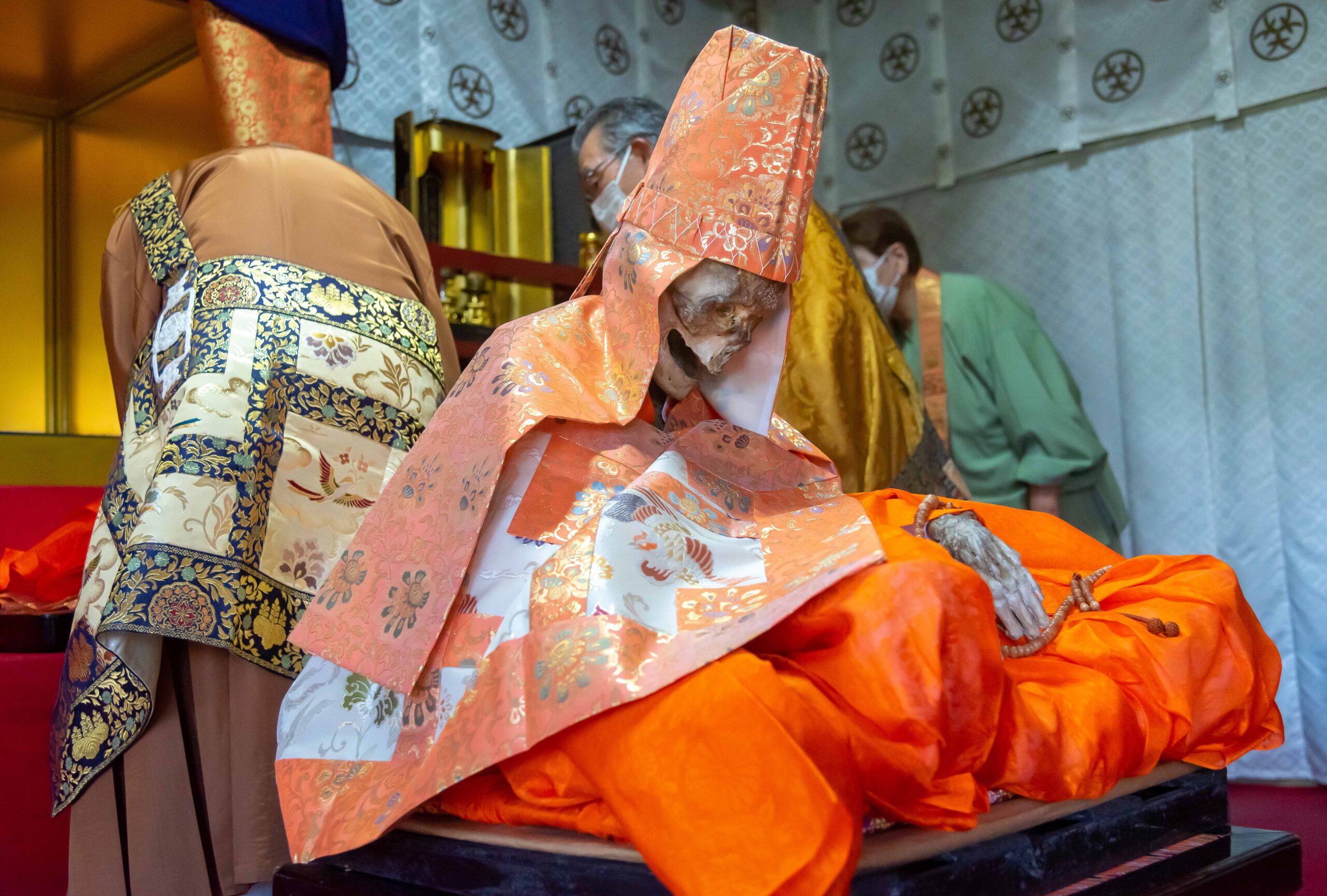
Among the pantheon of Japan’s holy mountains, Mount Yudono occupies a singular place. Hidden deep in the forests of Yamagata Prefecture, this enigmatic site is home to an unusually high concentration of sokushinbutsu, mummified remains of Buddhist ascetics revered as “living Buddhas.”
Across Japan, around only 18 sokushinbutsu are known to exist. Yet nearly half of them are found in and around the Dewa Sanzan region, particularly near Mount Yudono. This is no coincidence. Their existence lies at the crossroads of esoteric Buddhism, mountain worship, political conflict, and extreme ascetic practice.
What is a sokushinbutsu?
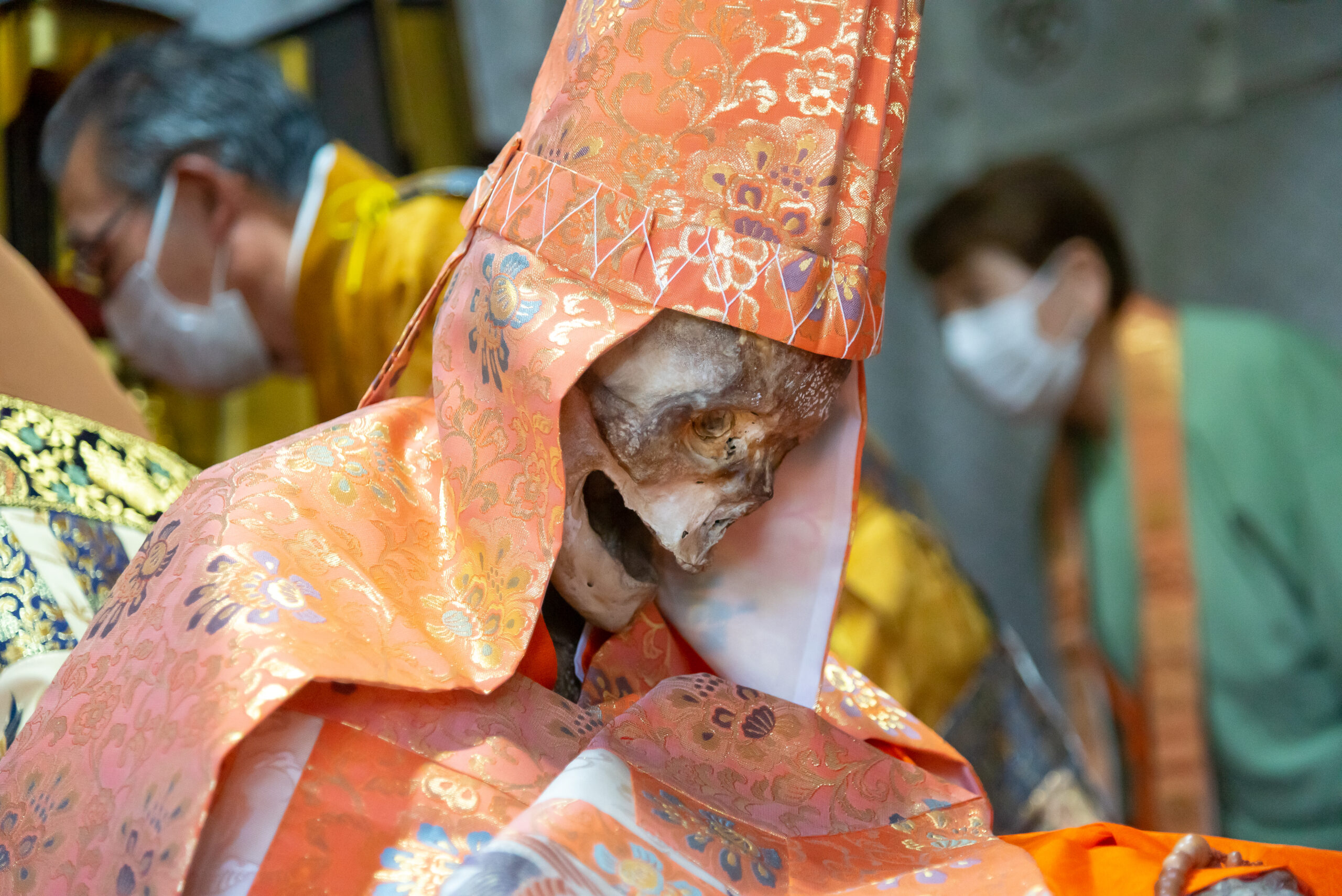
Sokushinbutsu esoteric practices arerooted in esoteric Buddhism, particularly the Shingon tradition founded by Kikai (774–835), also known as Kōbō Daishi. Central to Shingon belief is the idea of sokushinjobutsu—achieving Buddhahood in one’s living body, without waiting for rebirth.
This concept resonated deeply with ascetics who believed that through extreme discipline, physical suffering, and ritual purity, the human body itself could become a vessel of enlightenment. Mount Yudono, already revered as a liminal place between life and death, became one of the most important sites for putting this belief into practice.
During the Edo period (1603–1868), large numbers of independent ascetics known as issei gyonin, religious practitioners outside formal monastic hierarchies, flocked to Mount Yudono. Many came from distant regions of Japan, drawn by its reputation as a place where the most extreme and transformative practices could be undertaken. The issei gyonin lived apart from society, often staying on Mount Yudono year-round—even through the harsh winters of northern Japan. They practiced mokujiki, a severe diet excluding grains and relying only on wild plants, roots, and bark. This diet was believed to purify the body and prevent decay after death.
Their most revered practice was sennichi yamagomori: a thousand-day seclusion in the mountains. Some ascetics went even further, committing to a ritual known as dochu nyujo—entering a subterranean chamber to meditate until death, with the intention of becoming a sokushinbutsu.
While later scientific studies suggest that mummification was likely completed artificially after death, the spiritual significance of the act was never dependent on biology alone. What mattered was the ascetic’s vow to offer his own body for the salvation of others—a concept known as shujo kyusai (衆生救済).
Why are there so many of them around Mount Yudono?
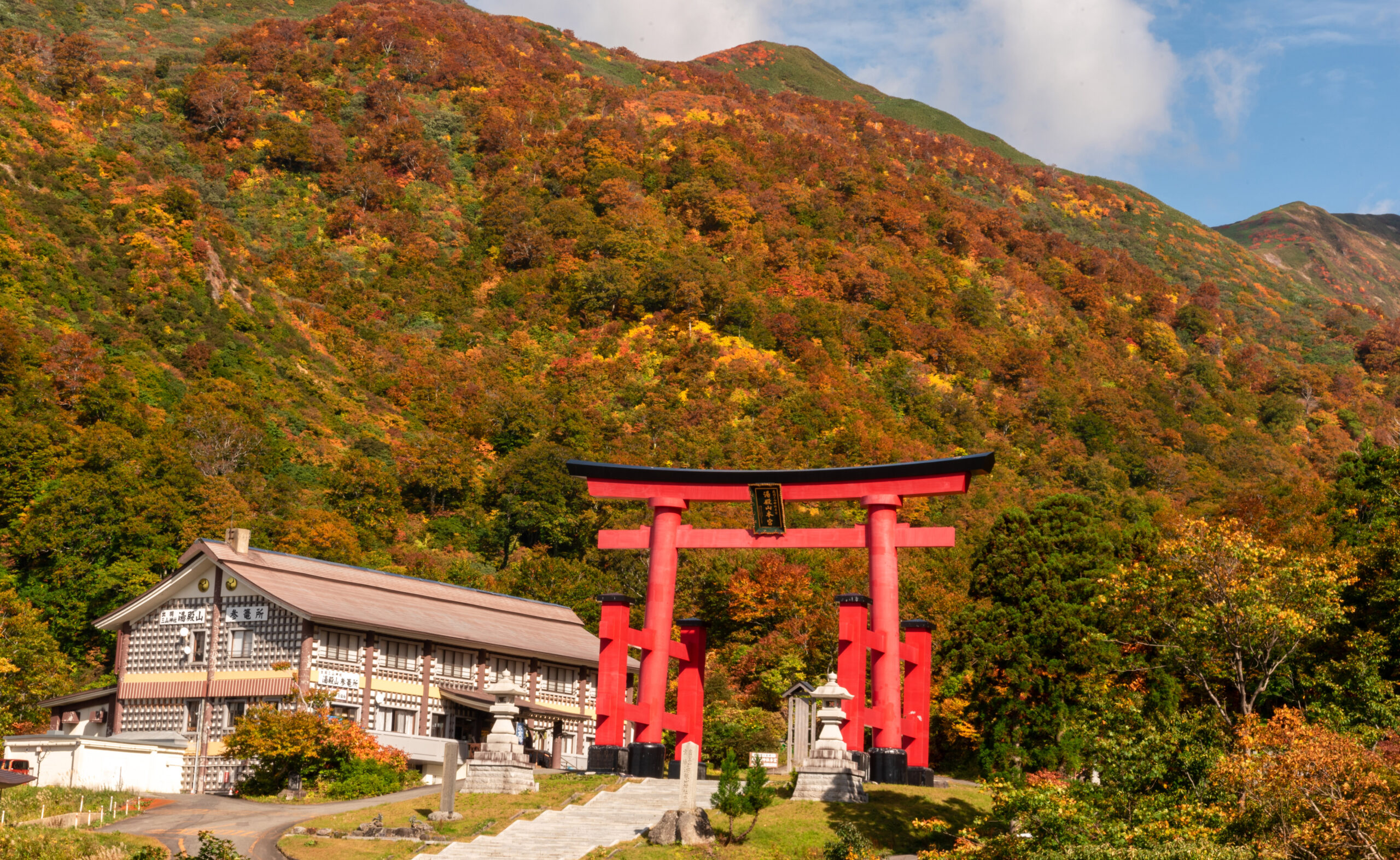
Mount Yudono is often grouped with Mount Haguro and Mount Gassan as part of the Dewa Sanzan pilgrimage. But unlike its sister peaks, Yudono is not defined by a summit or a panoramic view. Its object of worship is a massive, dome-shaped rock hidden in the Senninzawa Valley, constantly bathed in mineral-rich hot spring waters.
For centuries, this rock has been regarded as the inner sanctuary of the Dewa Sanzan—the most secret and spiritually potent place in the pilgrimage. Worshippers traditionally enter barefoot, swear oaths of secrecy, and perform purification rites on site. This intense sacrality made Mount Yudono a natural magnet for practitioners seeking the most demanding forms of religious discipline.
Until the early modern period, the Dewa Sanzan mountains were shared by multiple religious traditions, blending Buddhism, Shinto, and Shugendo. This balance shifted in 1641, when Mount Haguro officially aligned itself with the Tendai sect of Buddhism under pressure from the Tokugawa shogunate.
Shingon-sect practitioners on Mount Yudono refused to follow. Their resistance triggered a prolonged sectarian conflict that ultimately pushed Shingon-affiliated ascetics into an increasingly isolated position. Ironically, this marginalization strengthened Mount Yudono’s appeal and launched a “sokushinbutsu boom” on Mount Yudono.
Interestingly, sokushinbutsu were not famous during the Edo period. Pilgrims came to Mount Yudono primarily for its rituals and sacred landscape, not to venerate mummies. That changed dramatically after the Meiji Restoration in 1868.
The new government enforced the separation of Buddhism and Shinto, stripping many Buddhist institutions of their lands and functions. In the Mount Yudono area, only two temples, Churenji and Dainichibo, refused to abandon their Shingon identity. Cut off from their traditional roles and income, these temples turned to the sokushinbutsu they enshrined as their principal objects of worship.
Paradoxically, the very policies that sought to suppress Buddhism helped elevate the sokushinbutsu to prominence. As stories of the “living Buddhas” (i.e. sokushinbutsu) spread, pilgrims returned and Mount Yudono became inseparable from their legacy.
Mount Yudono produced many sokushinbutsu because it combined several rare conditions:
- An esoteric belief system that valued bodily enlightenment
- A sacred geography centered on death, rebirth, and secrecy
- Sectarian conflict that concentrated radical practitioners
- A tradition of extreme asceticism supported by local communities
Rather than being an isolated curiosity, sokushinbutsu are the human expression of Mount Yudono’s spiritual logic. They embody the mountain’s role as a threshold—between life and death, body and spirit, this world and the next.
Today, these mummified ascetics are not relics of a morbid past, but guardians of a living religious landscape. To understand why so many of them rest near Mount Yudono is to understand the mountain itself.
How to see the sokushinbutsu mummies of the Dewa Sanzan
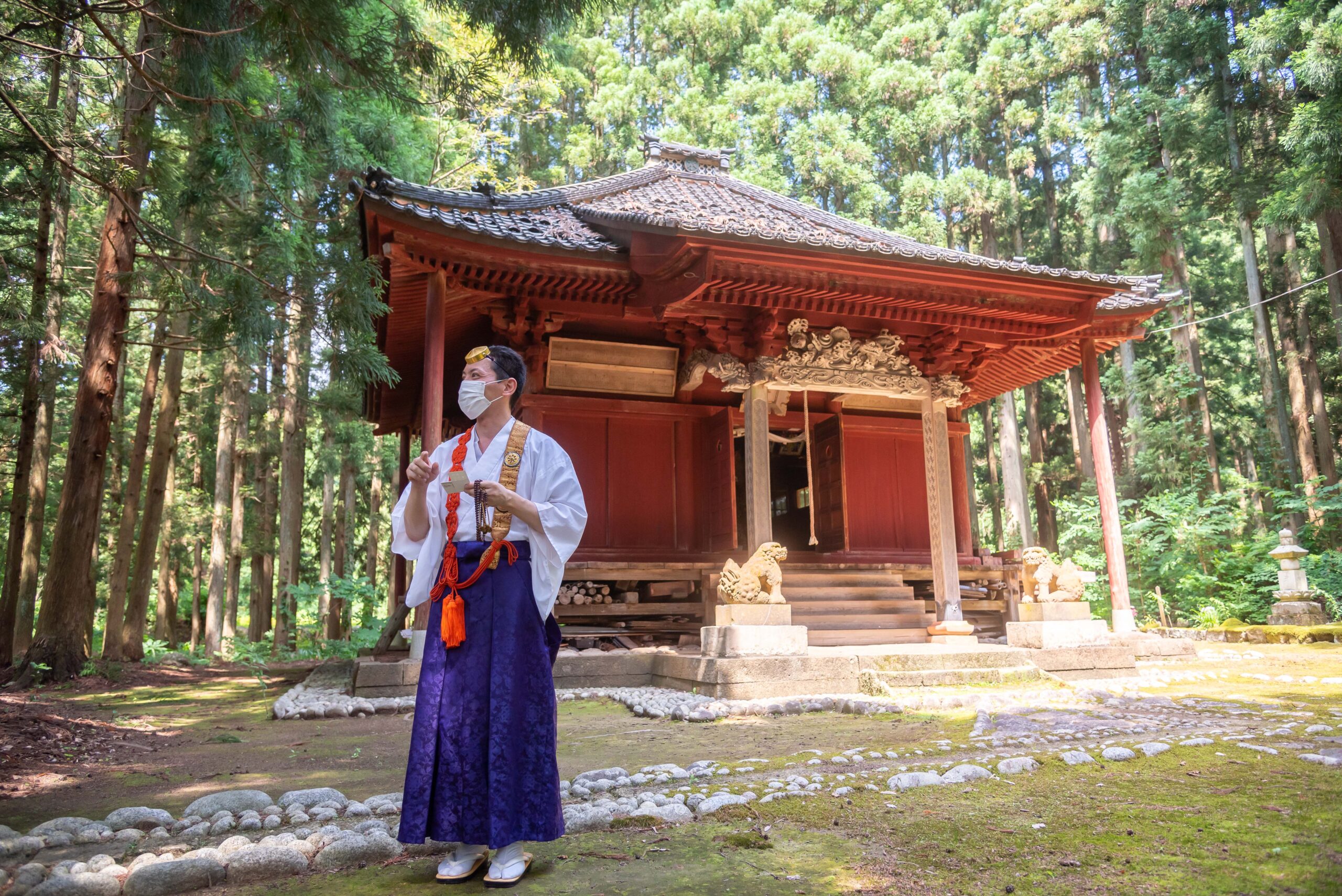
Out of the 18 sokushinbutsu mummies known to exist in Japan, 11 are those of monks who followed the ascetic mummification training on Mount Yudono. Most are located within a 150-kilometer radius of Mount Yudono. Four of them are located in Tsuruoka, two in Sakata (at Kaikoji Temple), one in Murakami, and two others in the Yamagata Prefecture municipalities of Shirataka and Yonezawa.
To see the sokushinbutsu of Tsuruoka during your visit of the Dewa Sanzan, we recommend following our guide “How to Reach Mount Yudono,” where you’ll be able to visit four sokushinbutsu: those of Honmyoji Temple, Churenji Temple, and Dainichibo Temple, plus one in central Tsuruoka at Nangakuji Temple. As some of these temples require a reservation to visit, we recommend signing up for a guided or self-guided tour, or making a reservation in Japanese by phone in advance.

