
Dewa no Kodo: The Shingon Buddhist Pilgrimage of the Dewa Sanzan

According to a 17th-century scroll, the sacred mountains of Mount Haguro, Mount Gassan, and Mount Yudono were first opened as a triad of Shugendo sacred sites by Prince Hachiko, also known as Nojo Taishi, the son of Emperor Sushun, the 32nd emperor of Japan.
In 592, Emperor Sushun was assassinated by Soga no Umako—his powerful political ally-turned-rival. In the aftermath of this upheaval, Prince Hachiko was advised by his cousin, Prince Shotoku Taishi, a key figure in the introduction of Buddhism to Japan, to flee the capital and seek refuge in the distant land of Dewa.
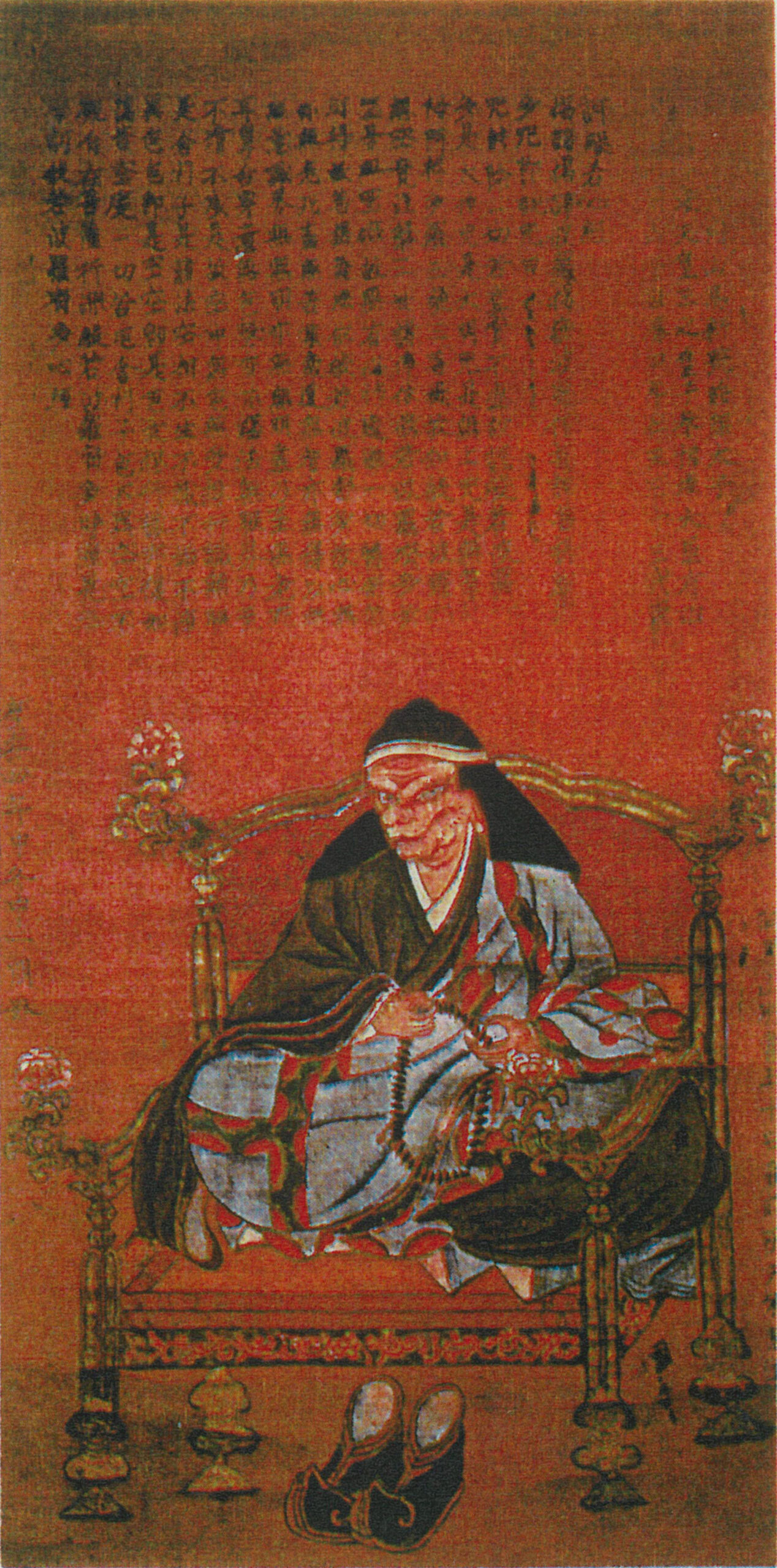
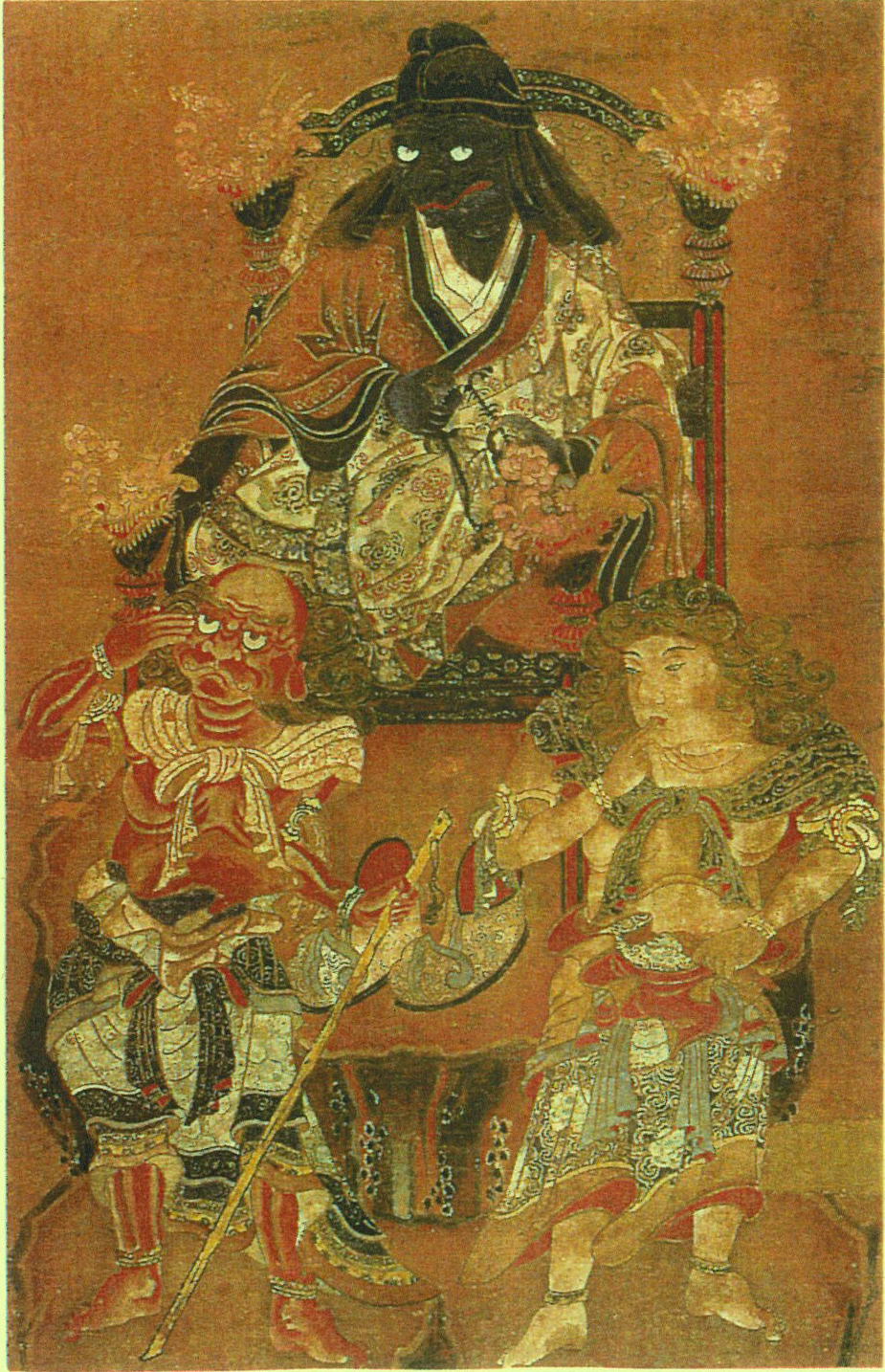
According to legend, the land of Dewa was under the protection of deity of compassion Kanzeon Bosatsu (aka Avalokiteśvara), who was believed to be capable of saving Prince Hachiko from suffering and political turmoil. After an arduous journey that took him across Sado Island and along the coast of Yura, Prince Hachiko is said to have arrived at Mount Haguro in 593, guided by a mystical three-legged raven known as Yatagarasu (八咫烏). The raven’s dark wings are said to have inspired the mountain’s name, Mount Haguro (羽黒山, lit. “The Mountain of Black Wings”).
The legend continues, recounting that Prince Hachiko later discovered Mount Gassan and Mount Yudono, where he identified distinct Buddhist deities residing within each mountain: Amida Nyorai at Mount Gassan and Dainichi Nyorai at Mount Yudono. Through these revelations, the three peaks were established as a sacred triad, forming what would later be known as the Dewa Sanzan.
This origin story gives Mount Haguro a unique position within the broader Shugendo religious landscape of Japan. While most Shugendo sacred sites are traditionally attributed to the ascetic En no Gyōja (aka En no Ozunu), the Dewa Sanzan are said to have been consecrated by a member of the imperial family. Today, a memorial dedicated to Prince Hachiko stands at the summit of Mount Haguro, alongside Hachiko Jinja (蜂子神社), a shrine devoted entirely to him. This shrine remains the setting for some of the most important yamabushi rituals, including the Hassakusai and Shōresai festivals.
The Dewa Sanzan Shrine recognizes this narrative as its canonical history. At the same time, it raises important historical questions—particularly regarding Mount Chokai (in present-day Yuza) and Mount Hayama (in present-day Sagae), both of which were formerly counted among the three sacred mountains of the Dewa Sanzan prior to the fifteenth century—before Mount Yudono assumed its current central role.
Mt. Yudono, a sacred site of Shingon Buddhism
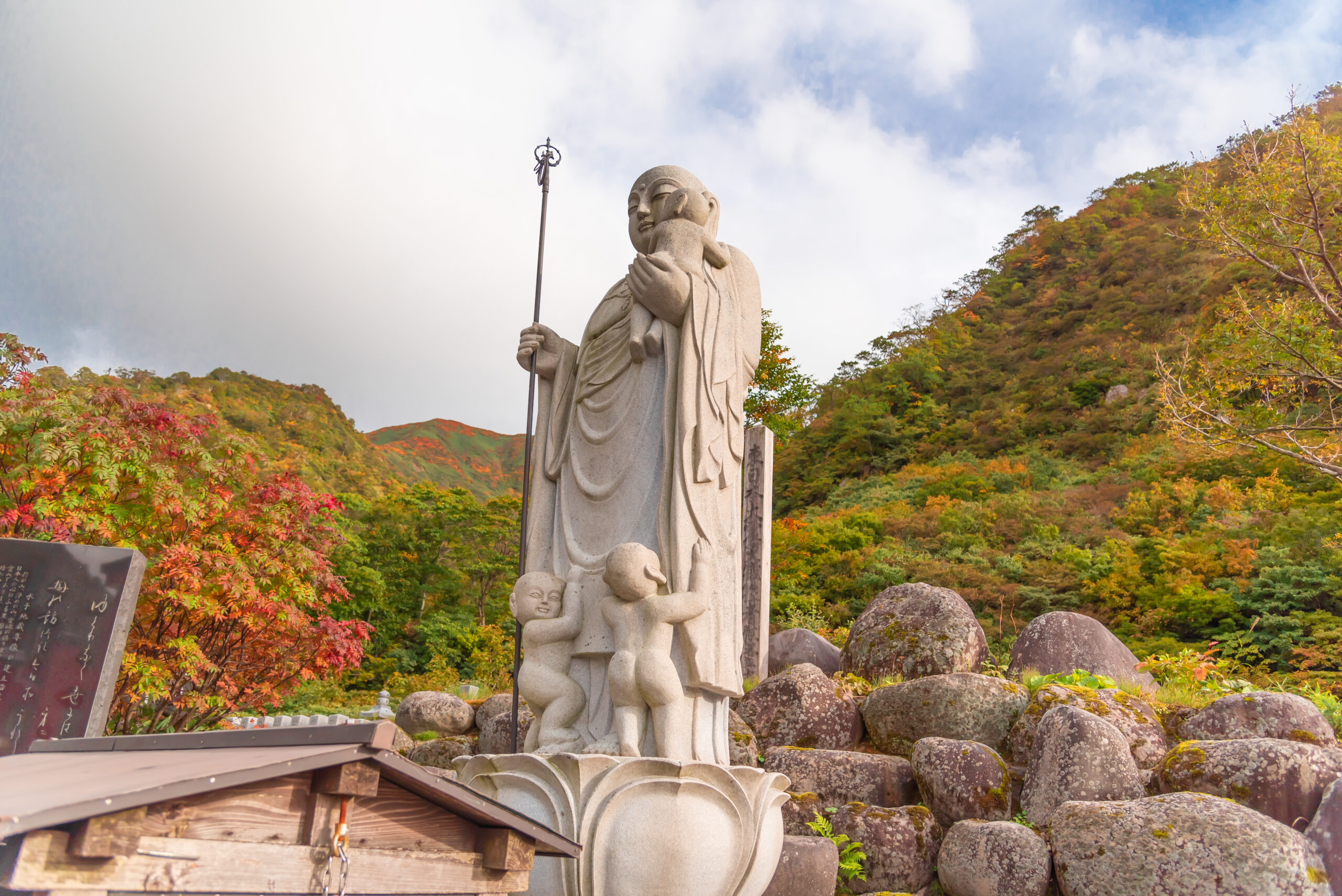
According to temple traditions tied to Mount Yudono, the mountain had already developed its own ascetic practices prior to its incorporation into the Dewa Sanzan triad of holy mountains. These practices are closely associated with the spiritual legacy of Kobo Daishi (aka Kukai), the founder of Shingon Buddhism, who is traditionally regarded as the mountain’s spiritual originator. Elements such as ritual attire, emphasis on bodily discipline, and concepts of rebirth reveal notable affinities with religious practices found on neighboring sacred mountains including Mount Haguro.
When religious authorities sought, from the early Edo period (17th century) onward, to reorganize the sacred geography of the Dewa region—eventually replacing Mount Chōkai with a mountain located closer to Mount Gassan—Mount Yudono emerged as the natural candidate. Its long-standing ascetic traditions and doctrinal proximity to existing practices within the Dewa Sanzan sphere made its inclusion both coherent and meaningful.
Mount Yudono was formally incorporated into the Dewa Sanzan in the early 17th century. Around the same time, Mount Haguro and Mount Gassan, which had previously functioned as sites of hasshu kengaku (八宗兼学, lit. “integrated learning of all eight Buddhist schools”), gradually came to be administered primarily under the Tendai sect. In the context of this broader institutional reorganization, efforts were made to harmonize the ritual frameworks across the three mountains, while still allowing for local religious expressions.
Mount Yudono, however, continued to emphasize teachings rooted in Shingon Buddhism, particularly those connected to sokushinjobutsu—the ideal of attaining Buddhahood in one’s physical body traditionally associated with Kobo Daishi. Over time, this doctrinal focus contributed to the development of highly distinctive ascetic practices, including the tradition of sokushinbutsu. Rather than constituting opposition, this diversity came to enrich the overall spiritual landscape of the Dewa Sanzan.
During the same period, Mount Haguro underwent significant ritual and architectural development. Under the leadership of figures such as Tenyū Bettō, large-scale construction projects were undertaken, including the stone stairway that continues to structure the mountain’s pilgrimage route today. These parallel developments highlight how each mountain cultivated its own strengths while contributing to a shared pilgrimage system.
This pluralistic religious environment enhanced the appeal of the Dewa Sanzan as a whole. During his journey recorded in his travelogue Oku no Hosomichi (aka The Narrow Road to the Deep North), poet Matsuo Basho visited visited all three holy mountains, composing poems inspired by each while recognizing Mount Yudono as the culmination of the pilgrimage.
Even today, the distinct identities preserved by Mount Haguro and Mount Yudono reflect a living religious heritage shaped by centuries of doctrinal dialogue, adaptation, and continuity. Far from diminishing the unity of the Dewa Sanzan, this coexistence of traditions is a defining feature of its authenticity—demonstrating how multiple religious lineages have collectively sustained one of Japan’s most enduring sacred landscapes.
The Dewa no Kodo, aka the Rokujurigoe Kaido pilgrimage
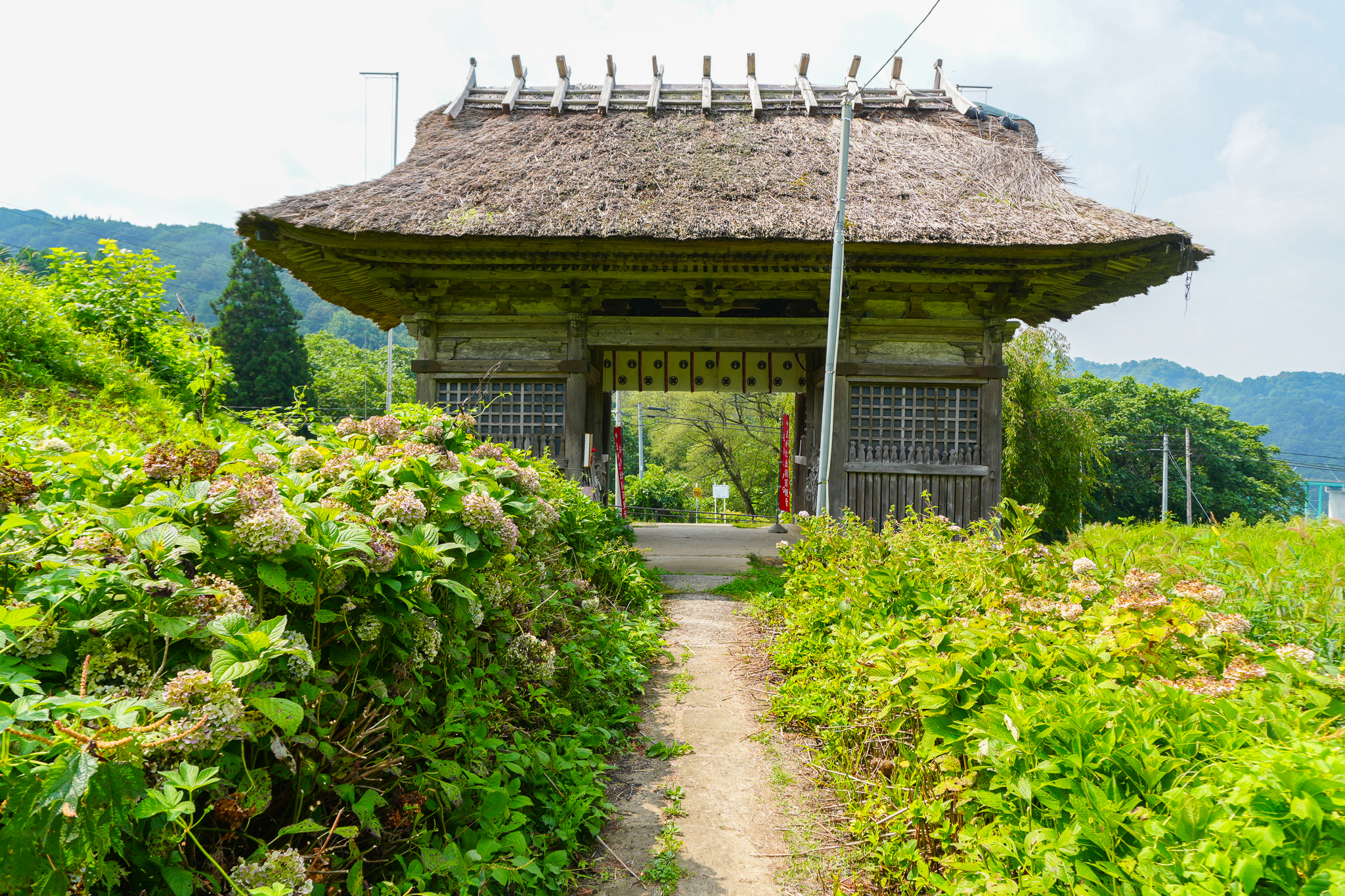
From a religious perspective, the Rokujurigoe Kaido represents the principal pilgrimage route to Mount Yudono, one of the most sacred sites of ascetic practice in northern Japan. In this sense, the road is traditionally understood as the Dewa no Kodo—(lit. “The Ancient Path of Dewa”), a spiritual corridor leading worshippers from the secular world into the innermost sacred realm of the Dewa Sanzan: Mount Yudono.
The origins of the trail are believed to date back to the early Heian period (794–1185), coinciding with the establishment of Churenji Temple in 833 and Dainichibo Temple in 852. These two temples, located in the village of Oami (present-day Asahi district of Tsuruoka, Yamagata), became the principal religious centers associated with Mount Yudono worship other than the mountain itself.
According to the Dewa Fudoki (出羽風土記), a regional gazetteer compiled in 1792, pilgrims were already traveling the Rokujurigoe Kaido to reach Mount Yudono as early as the Nara period (710–794). This establishes the route as one of the oldest continuously used pilgrimage roads in the Tohoku region.
Although it was also used for military and commercial purposes, the primary function of the Rokujurigoe Kaido was religious, guiding pilgrims toward Mount Yudono—a holy mountain long associated with Shingon Buddhism and later incorporated into the Dewa Sanzan triad in the 16th century.
The Rokujurigoe Kaido (六十里越街道, lit. “The Road Crossing of 60 Leagues”) takes its name from the traditional Japanese unit of distance known as the ri (里, Japanese league), measuring approximately 654 meters (0.4 miles).
Using this measure, the distance between Hondōji Temple and the village of Oami was calculated as exactly 60 ri, or approximately 39.2 kilometers (24.4 miles). As the route required pilgrims to traverse multiple mountain passes, it came to be known as the goe (越, lit. “crossing road”) hence the name Rokujurigoe Kaido.
Read our guide on how to hike the pilgrimage or see our Rokujurigoe Kaido page here for details.
Sources: 松田義幸(編集)、『出羽三山と日本人の精神文化―過去、現在そして未来… 』p.7-24
畠山弘、『湯殿山と即身仏』、爐の会 irori no kai, p.16-27

