
What Is a Yamabushi?
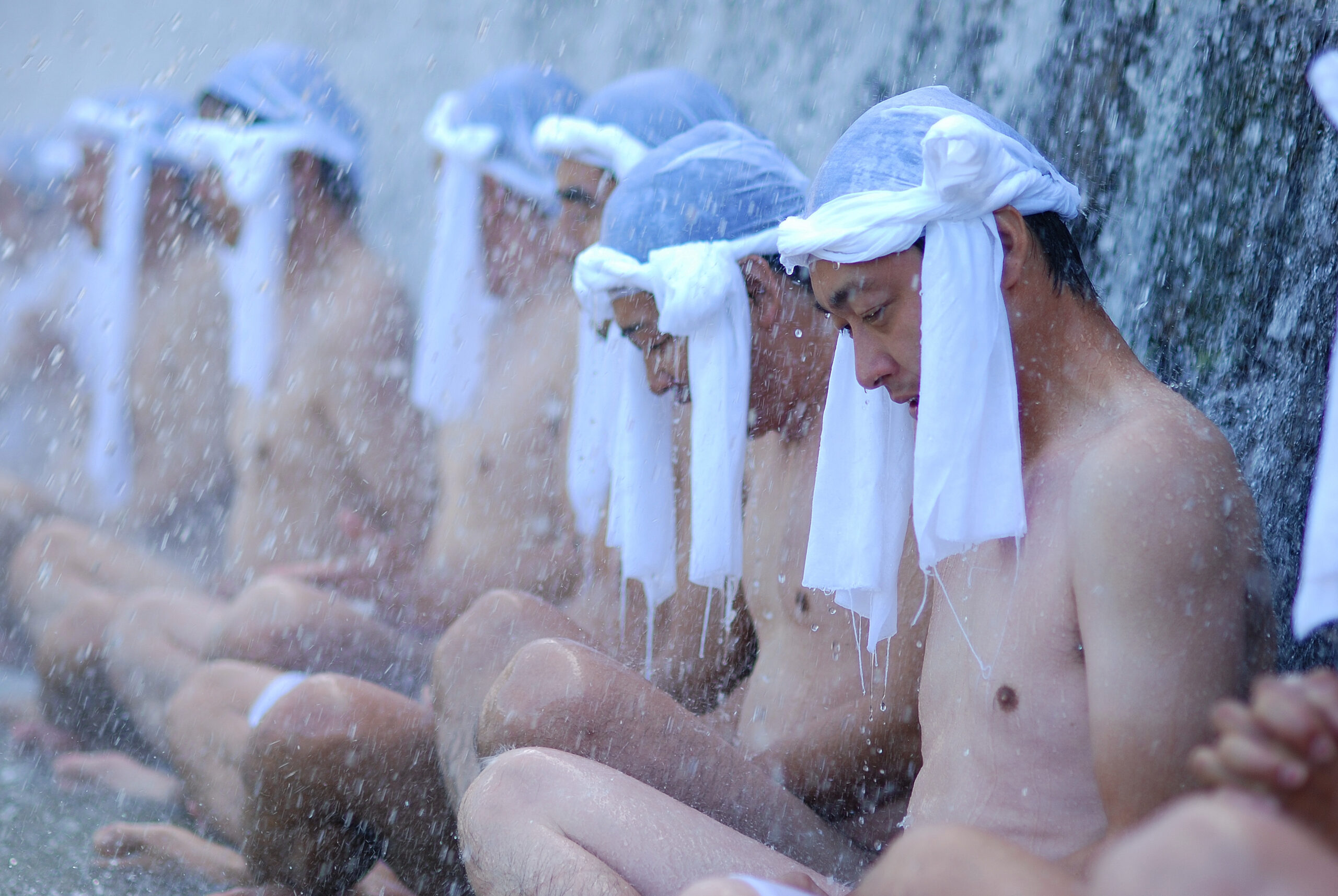
For more than 1,400 years, the mountain ascetics we now refer to as yamabushi have roamed the sacred peaks of the Dewa Sanzan. Even today, they continue to perform rituals and undertake rigorous training on Mount Haguro, Mount Gassan, and Mount Yudono.
But when we speak of yamabushi, whom are we really referring to?
Origins of Shugendo
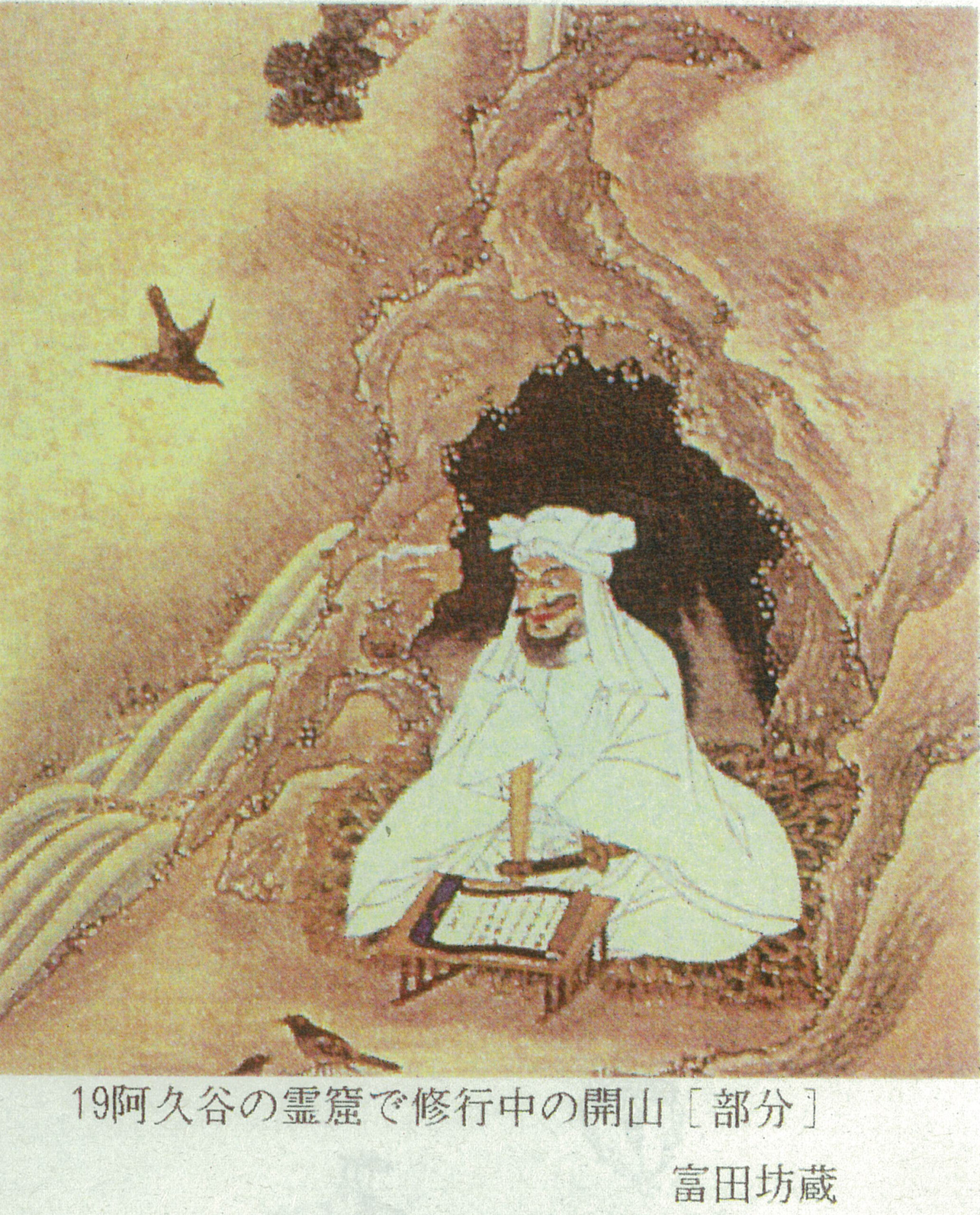
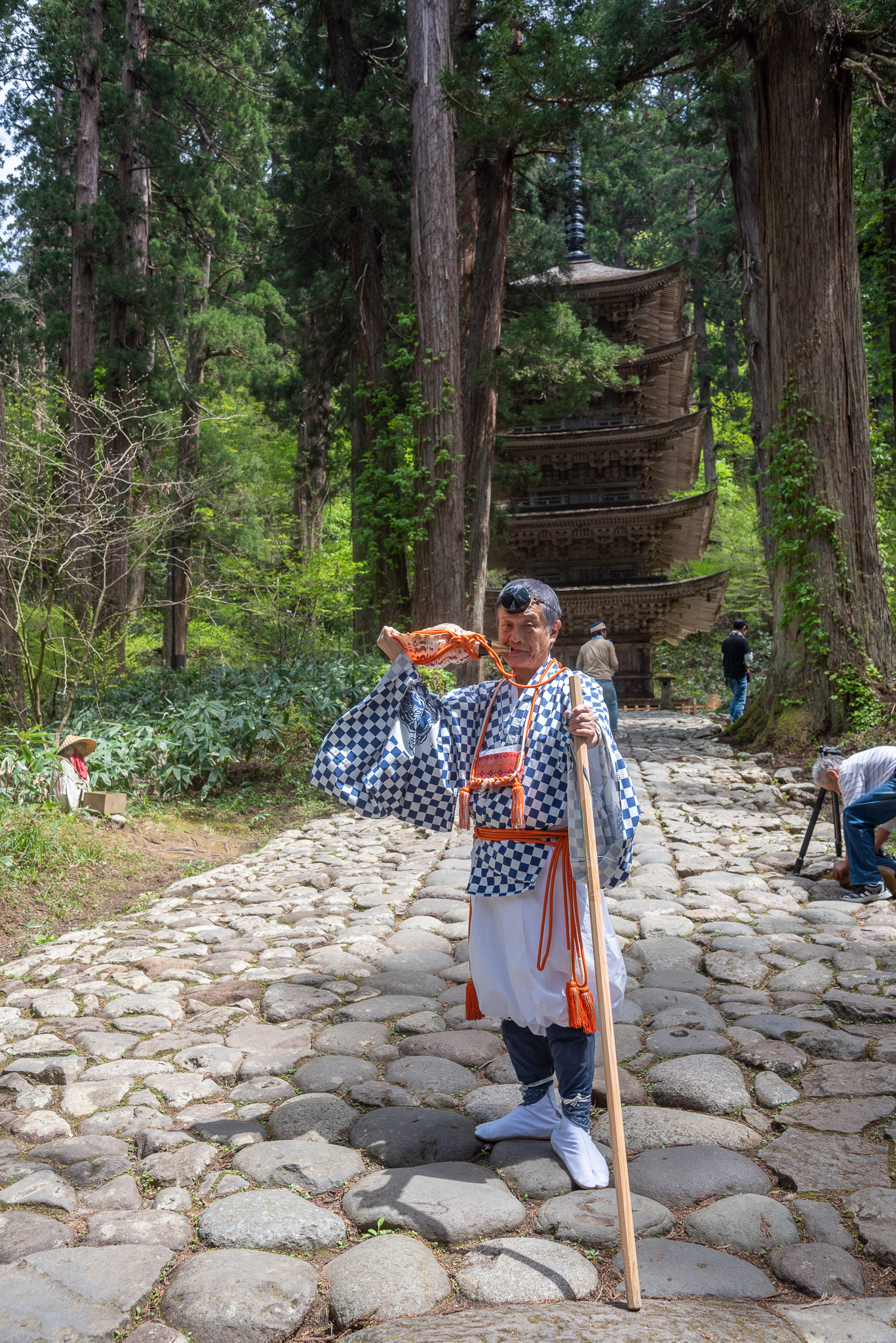
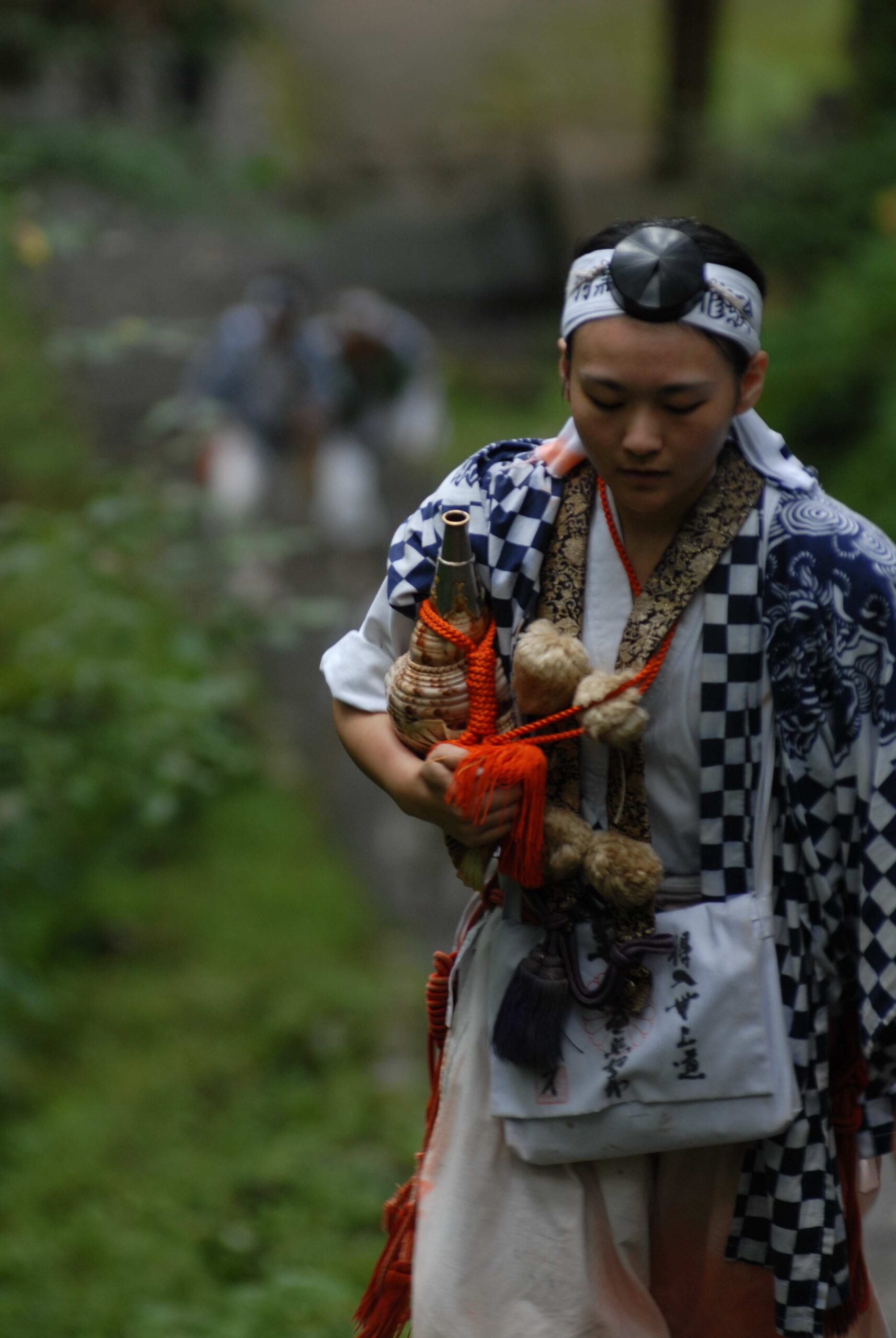
When we speak of yamabushi, we are in fact referring to shugenja (修験者), the practitioners of Shugendo.
Historically, shugenja was the primary term used to refer these mountain ascetics. However, in the 19th century, during Japan’s rapid modernization, Shugendo was officially banned as part of state policies aimed at suppressing practices labeled as “primitive” or incompatible with modern nation-building. In this context, the more neutral term yamabushi (山伏, lit. “those who prostrate in the mountains”) and already in use at the time—gradually replaced shugenja and became the more commonly adopted designation.
What exactly is Shugendo?
Shugendo is an ancient Japanese religious* tradition that emerged from sangaku shinko mountain worship (山岳信仰). Over the centuries, it incorporated elements of shamanism, Taoism, Onmyodo cosmology, and esoteric Buddhism. It was during the late Heian period (11th–12th centuries) that these diverse practices coalesced into a distinct tradition recognized as Shugendo.
At the heart of mountain worship lies a deeply ambivalent view of the mountain itself. The mountain is both a source of blessings—providing snow and water essential for agriculture—as well as a place of danger and fear, associated with death and the realm of ancestral spirits. It is seen simultaneously as the dwelling place of kami (Shinto deities) as well as the destination of the soul after death. From the mountain peaks, ancestors are believed to watch over the living, bestowing life-giving water each spring as the snow melts and flows down to the fields.
For this reason, Shugendō developed most strongly in major agricultural regions, particularly in rice-growing areas where water supply is vital.1
The term Shugendo (修験道) literally means “the Way of cultivating gen.” Gen (験) refers to the capacity to manifest extraordinary or supernatural power within one’s own body through the influence of divine forces. In other words, Shugendo is a system of beliefs and practices through which practitioners seek to embody the sacred—integrating Shinto and Buddhist, as well as other, spiritual powers within themselves.
Entering the mountains and communing with them is thus comparable to crossing into the realm of the dead, confronting the delicate balance between blessing and danger. Combined with the esoteric teachings of Tendai Buddhism, this experience enables the practitioner to acquire powers akin to those of a shaman—powers that can then be exercised for the benefit of people living in the plains.
In this sense, yamabushi are individuals who have mastered the teachings of the mountain: ascetics who commune with Shinto deities and aspire toward Buddhist rebirth through rigorous training in the mountain’s womb.2
*In this article, we use the term “religion” to refer to a codified set of beliefs and practices involving the worship of deities through ritual and prayer. It should be noted, however, that Shugendo differs from many major religions in that it has no canonical scripture and no single central figure of worship. For this reason, it is often described as a form of spirituality rather than a religion. For the sake of clarity, we nevertheless use the term “religion” here.
The separation between Shinto and Buddhism and its repercussions on the Dewa Sanzan yamabushi
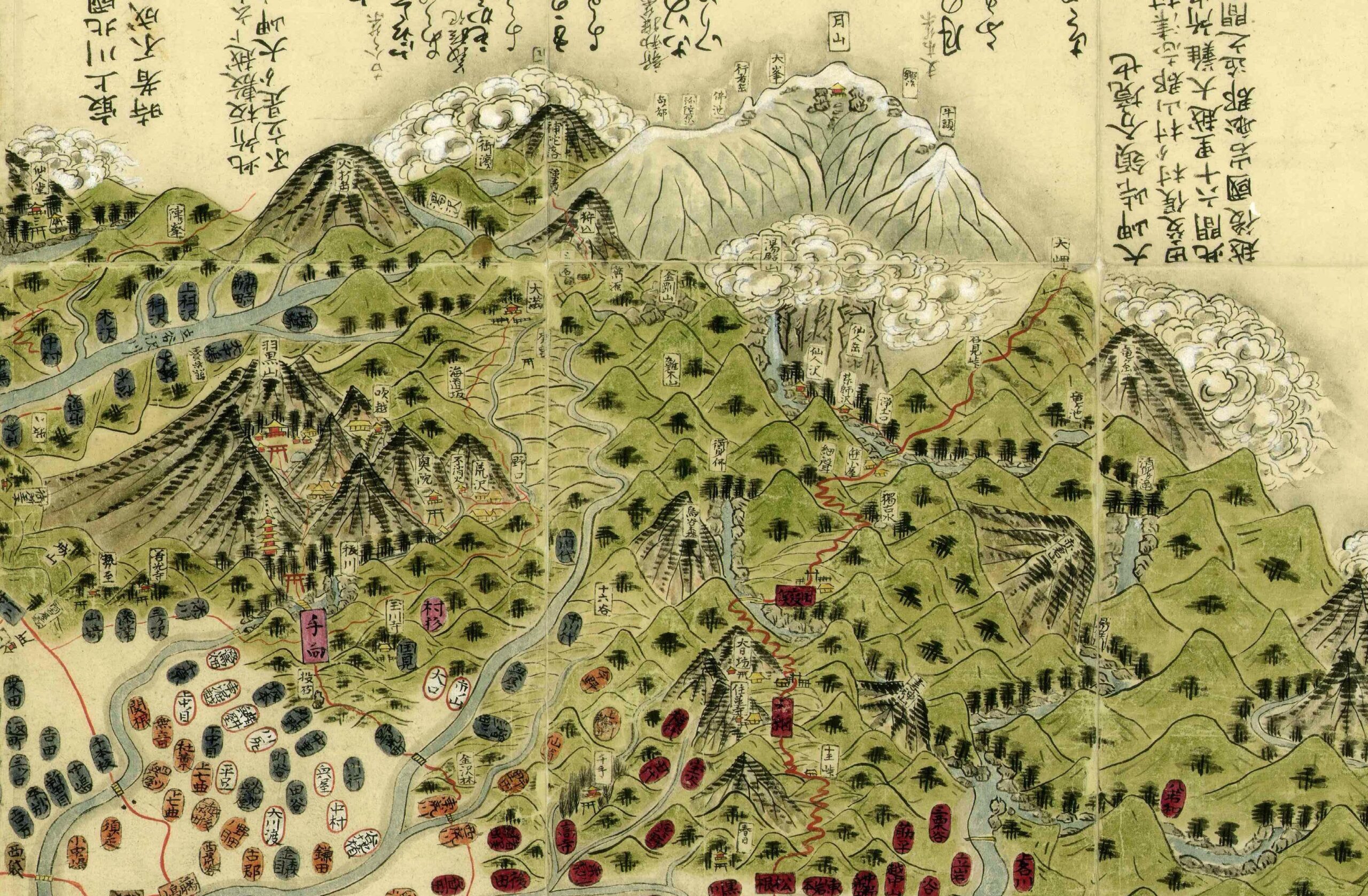
Dewa Sanzan is composed of three sacred mountains: Mount Haguro, Mount Gassan, and Mount Yudono. Although Mount Yudono joined the group in the early 17th century—replacing first Mount Chokai (in Yuza, Yamagata) and later Mount Hayama (in Sagae, Yamagata)—all three mountains had long been worshipped by Shugendo practitioners as sacred places where Buddhism and Shinto coexisted.
This situation changed dramatically after the Boshin War ended in 1868, which brought an end to the shogunate system of samurai rule. Soon afterward, the new Meiji government issued edicts enforcing the separation of Buddhism and Shinto (shinbutsu bunri, 神仏分離). Spiritual sites which embodied both traditions were required to convert exclusively to Shinto. These policies became enforced in the Dewa Sanzan area in 1869.
As a result, what had once been one of Japan’s major centers of esoteric Buddhist pilgrimage was transformed into a Shinto religious complex. Many Buddhist temples were closed, and numerous Buddhist statues were removed or defaced, a movement called haibutsu kishaku (廃仏毀釈, lit. “removing Buddha and crushing Shakyamuni”).
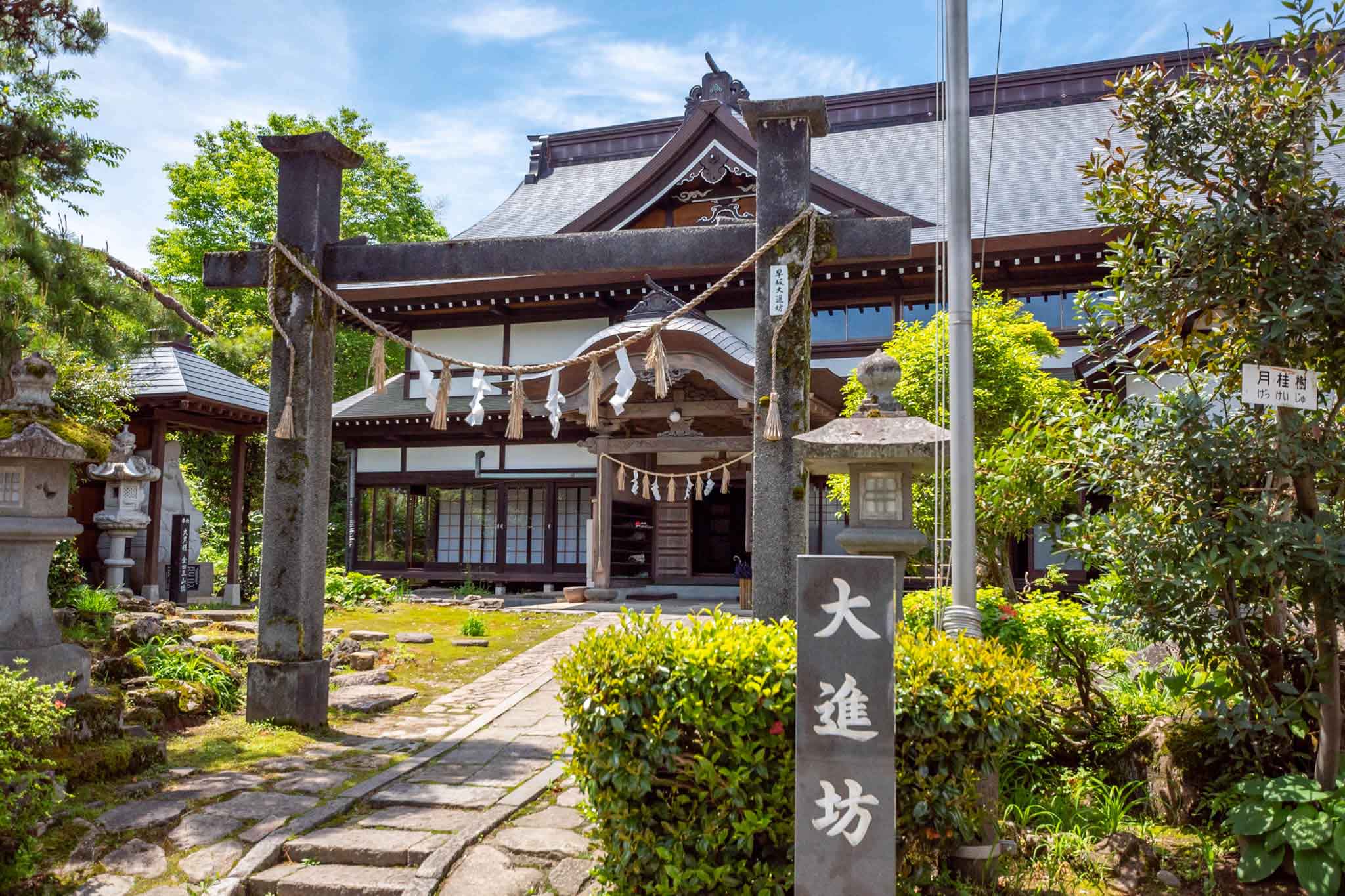
Shukubo pilgrim lodges ceased Buddhist dietary restrictions, such as abstaining from fish, and adopted Shinto-style ornamentation. Notably, the shukubo (宿坊) of Mount Haguro retained the Buddhist suffix -bo (lit. “monastic quarters”), a linguistic remnant of their former religious identity. The main temple hall of at the summit of Mount Haguro was also converted into a Shinto prayer hall, among many other structural and ritual changes.3
Today, only one Buddhist temple remains on Mount Haguro: Shōzen’in Temple. There, visitors can admire Koganedō Hall, often described as a physical mandala of the Dewa Sanzan. This hall enshrines ancient Buddhist statues that were once displayed throughout Mount Haguro but were relocated here to protect them from destruction during the period of religious segregation. Shōzen’in continues to lead the mineiri training in the Buddhist lineage as it has since the 17th century—a practice that differs in form and interpretation from the version conducted by the Dewa Sanzan Shrine.
We invite visitors to start their visit of the Dewa Sanzan by visiting Koganedo Hall, as it was once the traditional way of entering Mount Haguro on the way to Dewa Sanzan Shrine, to feel the harmony between Buddhism and Shinto that once existed in the Dewa Sanzan.
Yamabushi training
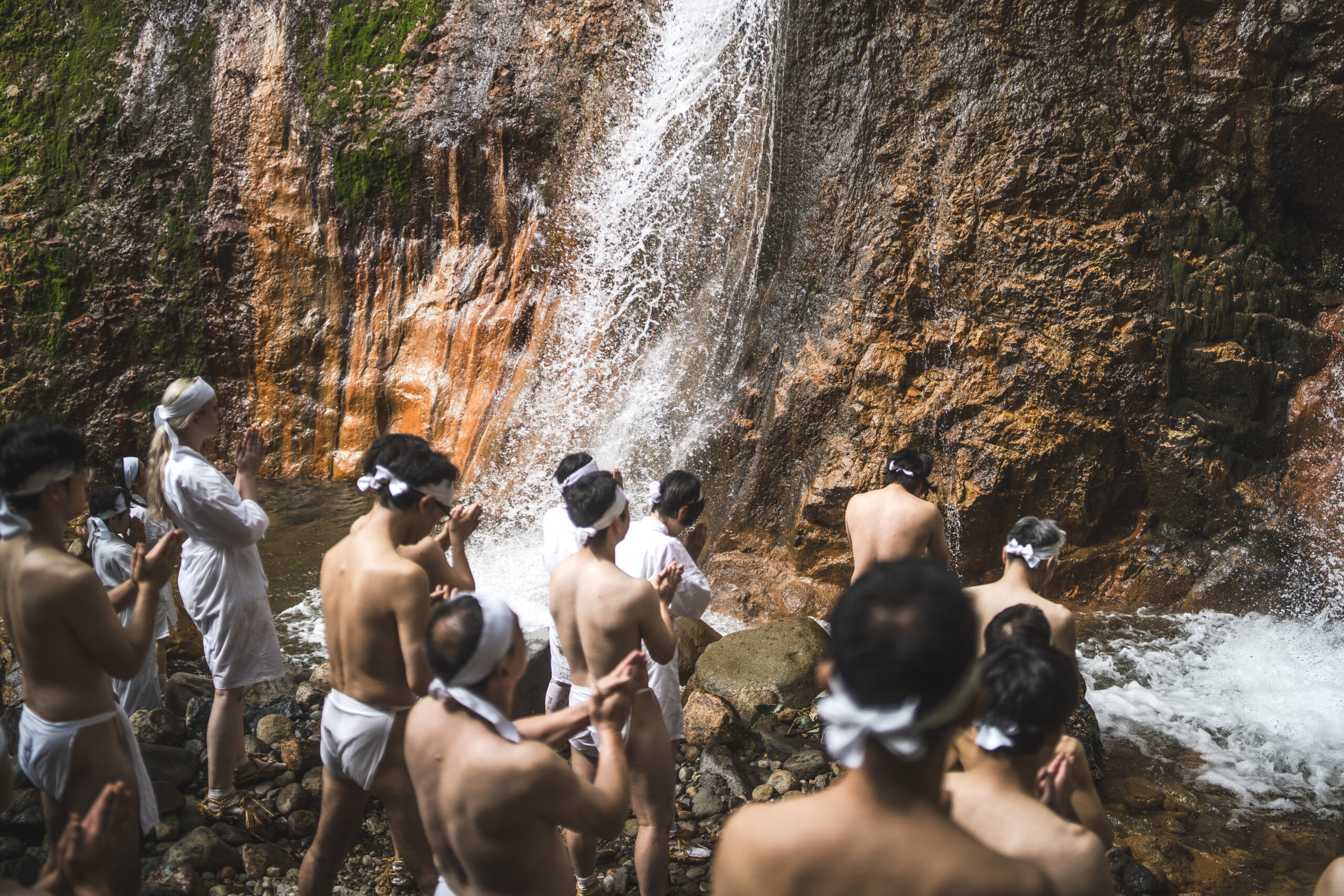
Yamabushi undergo a type of ascetic training known as shugyo (修行). This training generally falls into two main categories:
Ko (講)
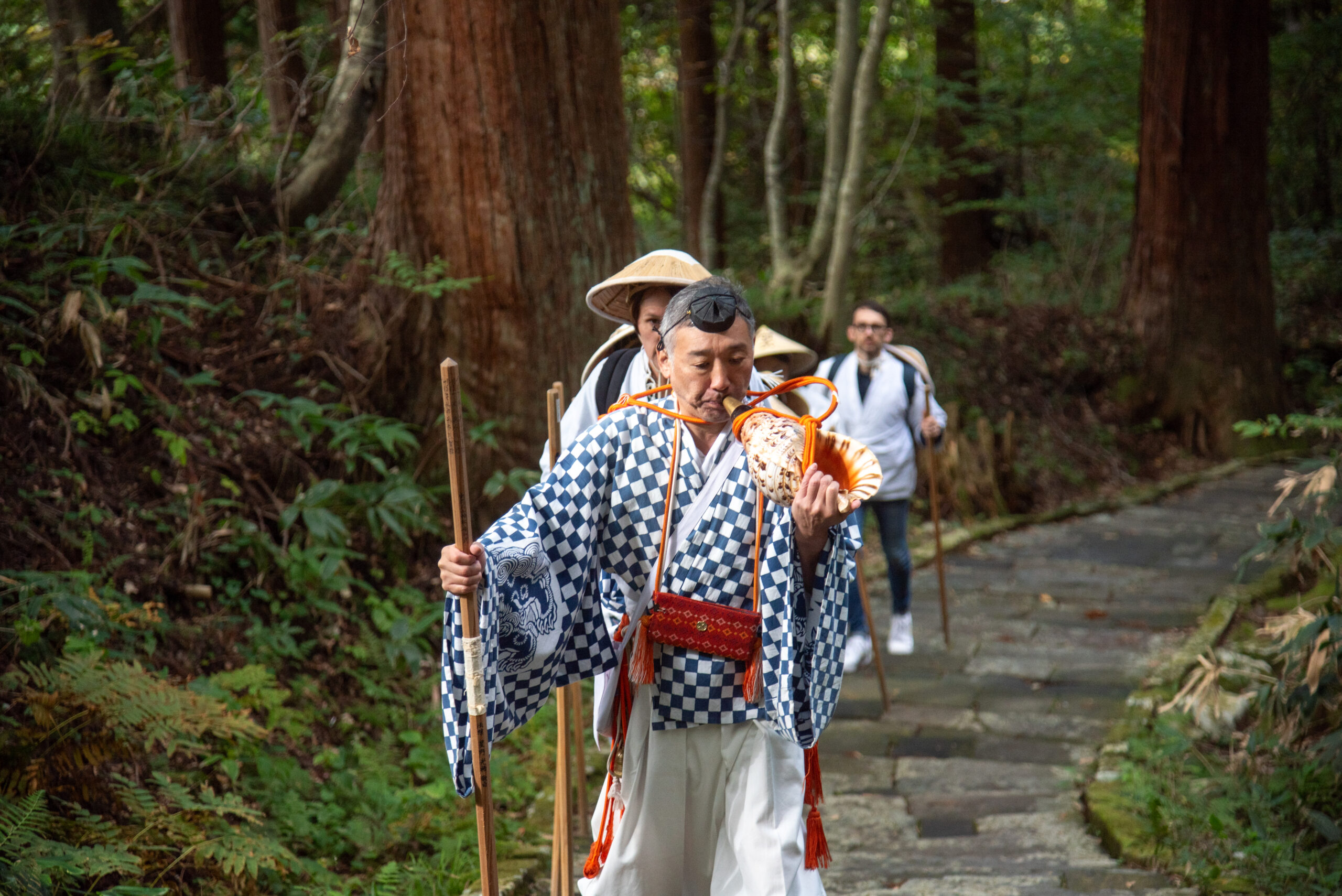
Ko refers to training programs organized and led by individual shukubo lodges, under the guidance of the head priest responsible for that lodge. The duration of a ko is not fixed and may last as long as the leader deems necessary. Each shukubo has its own distinctive practices and interpretations, meaning that no two ko are exactly the same. On Mount Haguro, there are as many ko traditions as there are shukubo lodges. Today, approximately 26 shukubo remain active, each preserving its own lineage of practice.
Mineiri (峰入り)
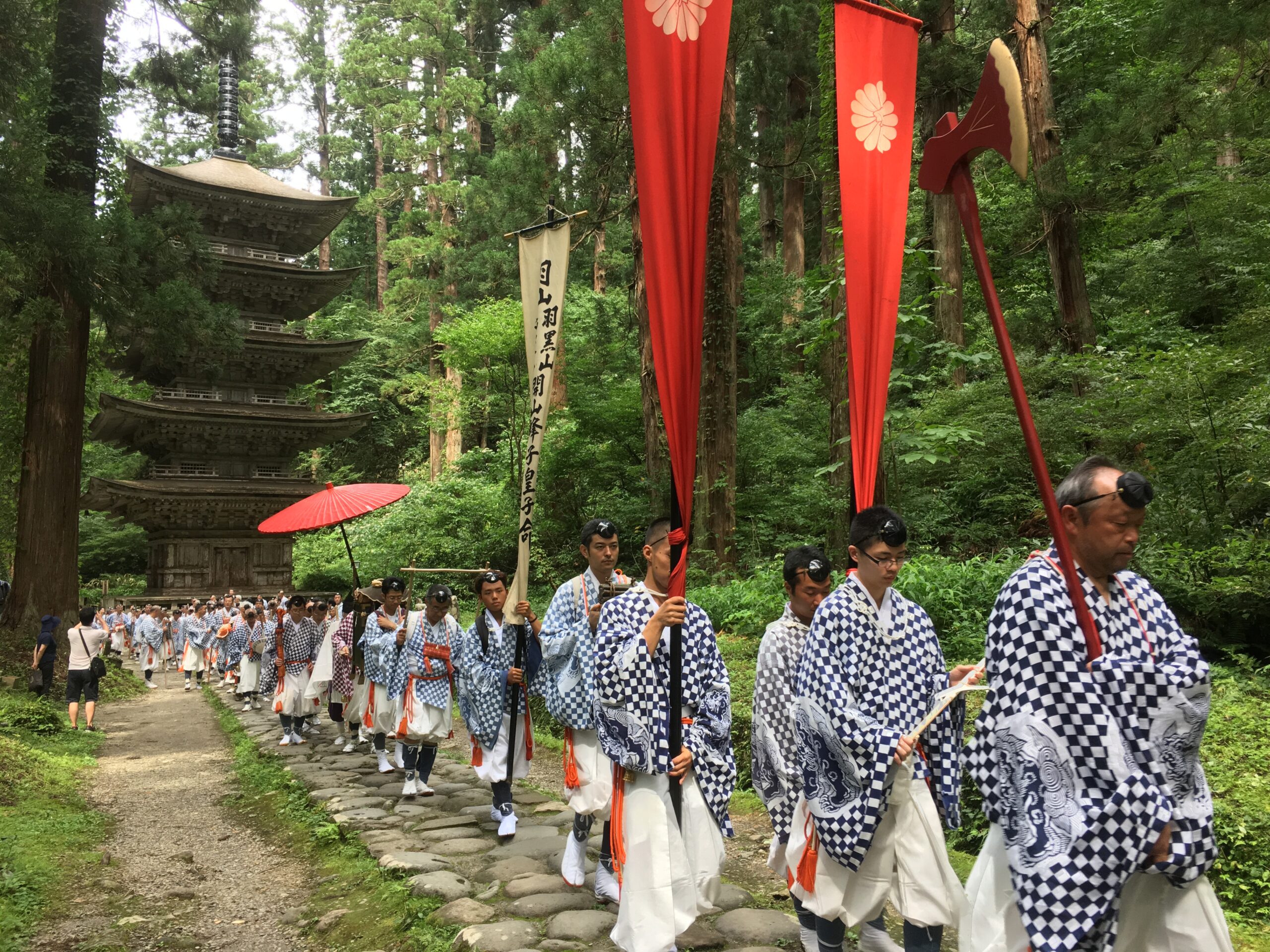
Also known as mine shugyo (峰修行), nyubu (入峰), or buchu (峰中), mineiri literally translates to “retreat at the peak” and refers to a formal mountain retreat. This training is conducted either by the Dewa Sanzan Shrine (Shinto lineage) or by Shozen’in Temple (Buddhist lineage), and is regarded as the most important ritual training in the life of a yamabushi. There is—or more precisely, used to be—a mineiri for each season, but the most significant is the autumn Aki no Mine (lit. “Autumn Retreat at the Peak“). It is during this training that new yamabushi are formally recognized by their respective religious authority.
Both forms of training are rooted in esoteric Buddhism, particularly Tendai Buddhism as practiced on Mount Haguro, which teaches methods of spiritual rebirth leading toward Buddhahood within one’s living body. Attaining Buddhahood enables the practitioner to guide and liberate others, a principle known as shujo kyusai (衆生救済), or the salvation of all sentient beings.3
Today, some local travel agencies—such as Yamabushido (Megurun Inc.) and Shoko Travel, offer visitors (including international travelers), opportunities to take part introductory yamabushi experiences. These range from short, one-day programs led by yamabushi priests to participation in ko training at a shukubo or, in certain cases, registration for a mineiri through the relevant religious institution.
The role of shukubo lodgings in the transmission of the legacy of the Dewa Sanzan
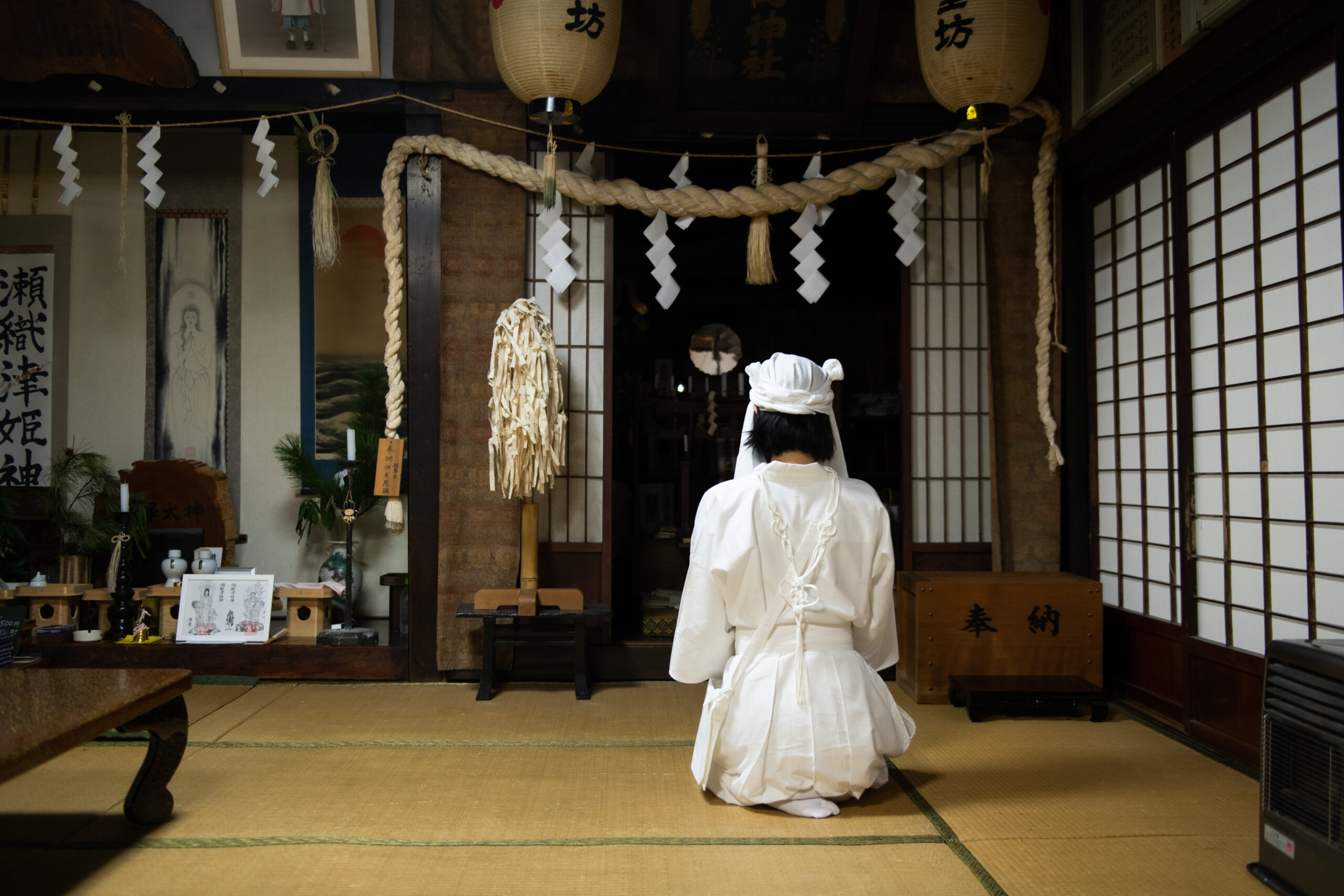
Shukubo lodges have been run by yamabushi priests for generations. As noted above, Shugendo has no canonical scripture; its practices have been transmitted primarily through oral tradition. For centuries, yamabushi who managed shukubo preserved this tradition by teaching their disciples within their own ko lineages. The shukubo represents the preliminary stage of the pilgrimage, preparing practitioners and pilgrims before they enter the sacred grounds of Dewa Sanzan. There, pilgrims partake in shojin ryori meals, undergo purification through the prayers of the lodge’s head priest, and don the white robe bestowed by their master—symbolizing willingness to undergo spiritual death and rebirth.
Today, however, demographic decline and a gradual distancing from spiritual practice have led to the closure of many shukubo. During the Edo period (1601–1868), more than 300 such shukubo operated on Mount Haguro alone. Today, only around 26 remain. As recently as 20 years ago, Dainichibo Temple in Ōami Village near Mount Yudono still welcomed overnight guests in its own shukubo.
Slowly, the shukubo of Dewa Sanzan are disappearing. With each closure, an entire chapter of the region’s living heritage is lost. For this reason, travelers who choose to stay overnight in a shukubo play a meaningful role in supporting the continuation of these centuries-old traditions.
Sources for this article:
- 宮家準(監修)、『峰入—修験道の本質を求めて』、千歳グループ開発センター. p.5-10
- 島津弘海+北村皆雄編著、『修験—千年の修験羽黒山伏の世界』, p.14
- 島津弘海+北村皆雄編著、『修験—千年の修験羽黒山伏の世界』, p.18 + 後藤赳司、『出羽三山の神仏分離』、岩田書院、p.46-58.

